As part of our efforts to reduce environmental impacts within our operations, one of the companies within the JT Group that manufactures and sells seasonings in Thailand, Thai Foods International, built and introduced in 2020 a biomass co-generation system, which uses rice husks as an alternative fuel source.
This system supplies the factory with the electricity and steam needed for production and contributes to the reduction of CO2 emissions. This initiative has been adopted by the Japan-Thailand Joint Crediting Mechanism (JCM) of the Ministry of Environment, and the JT Group believes that it will not only reduce its environmental impact and energy costs, but also contribute to greenhouse gas reduction.
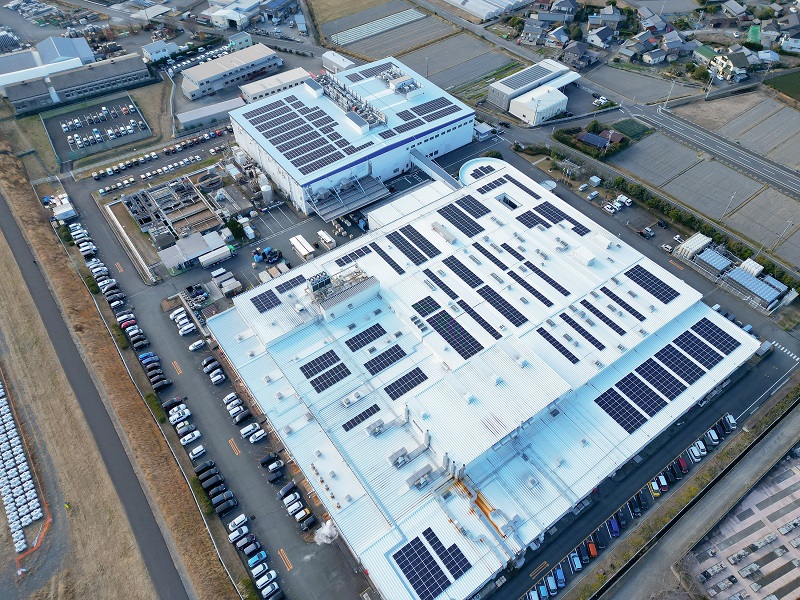
At the Shizuoka Kanaya Factory of Fuji Foods Corp., we introduced solar power generation equipment utilizing an on-site power purchase agreement (PPA) model in 2024 to cover part of electricity usage with renewable energy. This achieves a reduction in environmental impact and sustainable energy utilization.
Initiatives under Living with the Planet
Reduction of Greenhouse Gas Emissions
Eco-friendly packaging initiatives
Biomass plastic as a raw material for the packaging
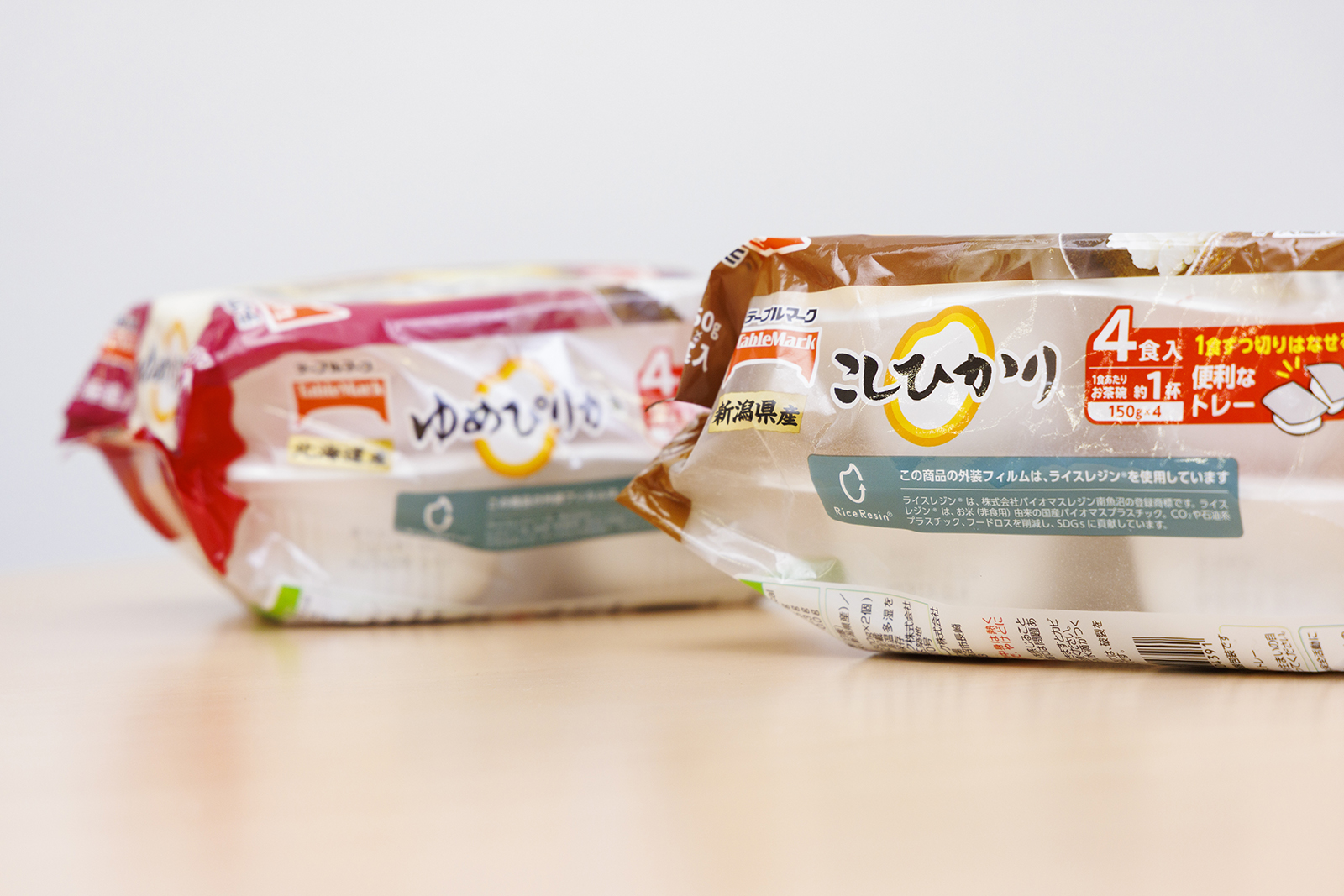
A by-product of rice milling is crushed rice: rice that is broken during the milling process and can no longer be used for manufacturing. In a first for the industry, we are now using the domestic carbon-neutral biomass plastic RiceResin®*1, which contains 10% crushed rice generated by our Group, as a raw material for the packaging of some of our cooked rice products. In addition to using RiceResin®, we have reduced the amount of petroleum-based plastic in our packaging by around 4.2% compared to conventional products. We have done this by making the exterior film even thinner.
- *1 RiceResin® is a registered trademark of Rice Resin inc. Old rice that is not edible and crushed rice generated during rice milling are upcycled into plastic using new technology.
- Biomass Co-generation System : Thai Foods International, built and introduced in 2020 a biomass co-generation system, which uses rice husks as an alternative fuel source.
- On-site Power Purchase Agreement (PPA) : At the Shizuoka Kanaya Factory of Fuji Foods Corp., we introduced solar power generation equipment utilizing an on-site power purchase agreement (PPA) model in 2024 to cover part of electricity usage with renewable energy.
- Eco-friendly Packaging : Eco-friendly packaging initiatives Biomass plastic as a raw material for the packaging
- RiceResin® : RiceResin® is a registered trademark of Rice Resin inc. Old rice that is not edible and crushed rice generated during rice milling are upcycled into plastic using new technology.