Processed Food Business
Business Purpose
Bringing Joy to Meals and Fun to the Table.
Industry overview
Japan's processed food market has continued to expand steadily against the backdrop of growing demand for quick and simplified meal preparation. This is largely due to the higher number of dual-income households and changing lifestyles. At the same time, the inherent value of processed foods, including a longer shelf life and convenience, has been reevaluated in daily life.
Meanwhile, the operating environment for processed food manufacturers remains challenging, primarily due to rising labor and logistics expenses, raw material costs, and other cost pressures. Under these circumstances, many manufacturers are adjusting product prices in response. In addition, the expansion of private brand product lineups by distribution companies is triggering a shift in the product mix at sales outlets where consumers purchase processed foods for home use.
While consumer expectations toward quick and simplified meal preparation, taste, and safety remain intact, the role of processed foods is expanding. This includes a growing consciousness toward health, increased interest in alternative proteins and plant-based ingredients as well as such diversifying requirements as the need to accommodate allergies and awareness toward the food cultures of different countries.
In overseas markets, interest in Japanese cuisine continues to climb especially in Europe, the U.S., and Asia, driving growth in the Japanese processed food market. Meanwhile, preferences, regulations, and the structure of distribution vary by country, making it crucial to develop business strategies that align with local laws, regulations, and needs.
The Company's frozen and ambient foods as well as seasonings operations fall under the umbrella of its processed food business. Every effort is made to strike an optimal balance between convenience and taste. By helping consumers experience the value of the products and services we provide through meals, we are working to realize our Purpose of "Bringing Joy to Meals and Fun to the Table."
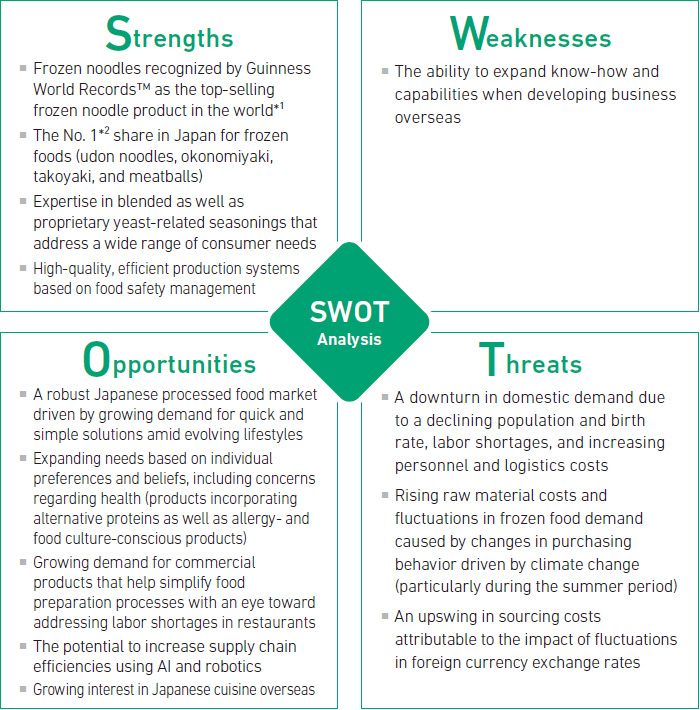
SWOT analysis
Frozen and ambient foods business
TableMark Co., Ltd. ("TableMark") and KS Frozen Foods Co., Ltd. ("KS Frozen Foods") spearhead the Company's frozen and ambient foods operations.
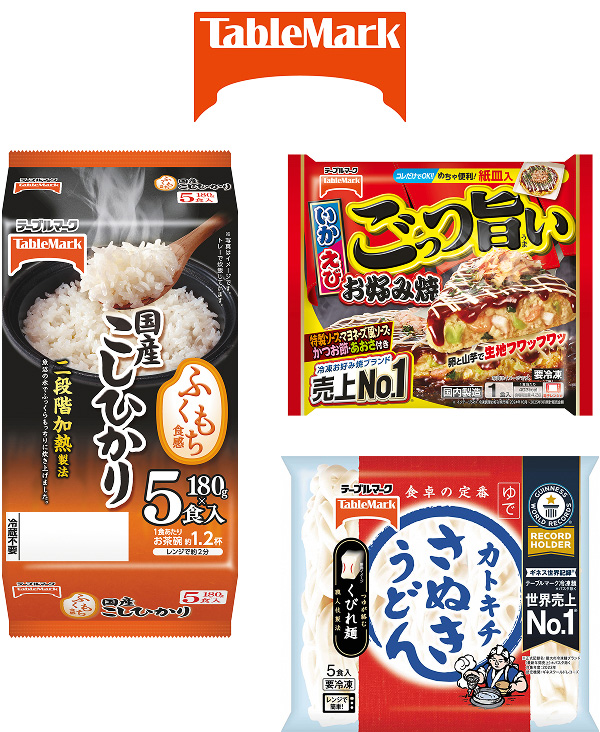
TableMark Co., Ltd.
TableMark handles both frozen and ambient foods for home use as well as frozen foods for commercial use and supports a broad array of culinary scenarios from daily home meals to dining out.
In its frozen food operations for home use, the company has attracted strong consumer support, particularly for its frozen udon noodles, frozen okonomiyaki, and frozen takoyaki, where it holds the No. 1*2 share in Japan. In addition, its frozen noodles have been recognized by Guinness World Records™ as the top-selling frozen noodle product in the world*1.
Through its home-use ambient foods operations, the company delivers packed cooked rice in its quest for a unique delicious taste through high-quality ingredients and excellent processing techniques.
For commercial-use frozen foods, the company provides products using innovative preparation processes as well as highly specialized products to a wide range of outlets, including restaurants, hotels, welfare facilities, and school cafeterias in a bid to address diverse consumer needs.
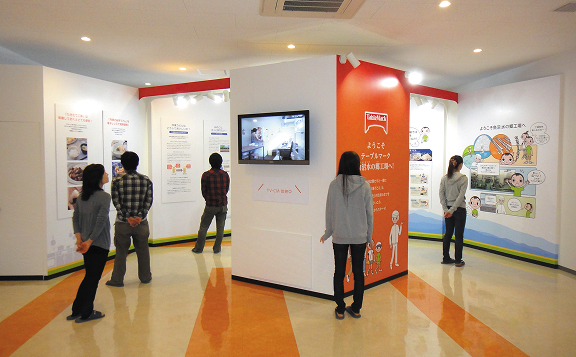
Leveraging the advanced food processing techniques it has cultivated over many years, including vacuum mixing for udon noodles and a two-stage heating process for packed cooked rice, TableMark manufactures products with quality as its top priority. As far as research and development is concerned, efforts that center on processing and fermentation research and encompass basic science to applied fields are based at the Food Research Institute. Here, the company works diligently to continuously improve product value. From a product development perspective, energies are directed toward meeting the diverse needs of consumers. This includes taste, convenience, health, and price.
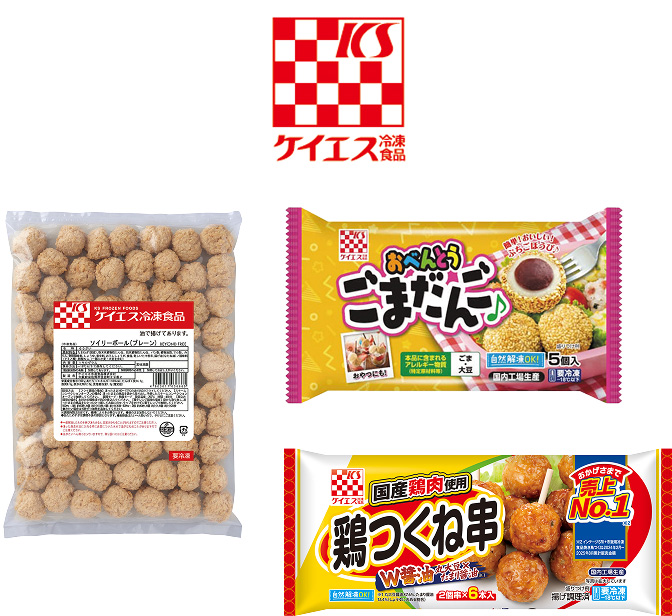
KS Frozen Foods Co., Ltd.
KS Frozen Foods holds the top market share in Japan for frozen meatballs*. Utilizing proprietary techniques, the company manufactures various products, including frozen chicken meatballs for home and commercial use.
In recent years, KS Frozen Foods released Soyly Ball, a meatball made entirely from plant-based ingredients for commercial use. Primarily used in the commercial sector, including the food service industry, as a vegetarian-friendly option and protein-rich menu item, Soyly Ball helps accommodate diverse diets while addressing dietary restrictions.
Seasonings business
Fuji Foods Corporation ("Fuji Foods") takes the lead in operating the seasonings business. Utilizing such proprietary ingredients and techniques as blended seasonings and the company's flagship yeast extracts, Fuji Foods sells products to the food service industry and processed food manufacturers. Outside Japan, operations are conducted across four bases in the U.S., Thailand, China, and Indonesia.
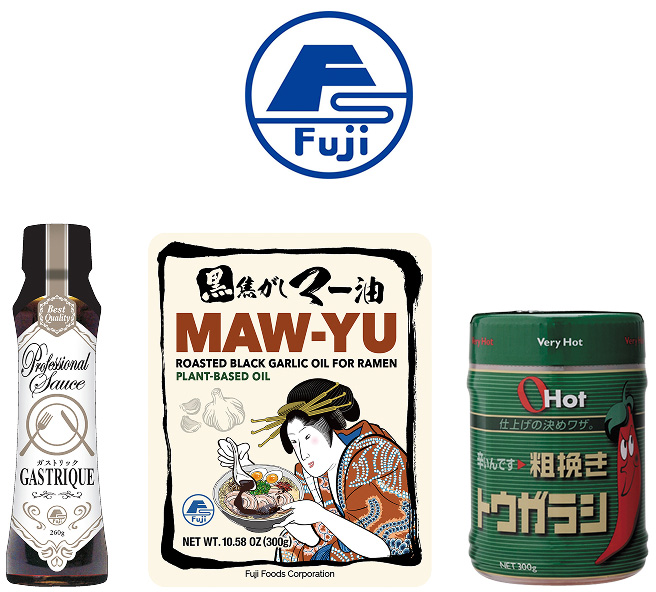
Fuji Foods Corporation
Celebrating its 70th anniversary in 2028, Fuji Foods supports the creation of taste across a wide range of fields as a food pioneer.
The company delivers authentic flavors more conveniently to the food service industry by mass produced products such as ramen soup bases and flavored oils with stable quality, thereby improving the efficiency of processes that require time and effort in the kitchen. Fuji Foods strengths lie in its ability to reproduce the same high level of quality, design products tailored to consumer applications and requirements, and meet diverse taste creation needs.
The company provides processed seasonings products, centered on yeast extracts, to processed food manufacturers. In addition to applying the exquisite taste drawn out using its proprietary enzyme-treated extraction techniques to a host of Japanese, Western, and Chinese cuisines, Fuji Foods engages in the research and development of yeast-related ingredients based on its fermentation expertise.
Overseas, the company rolls out products focusing mainly on North America and the ASEAN region. In addition to manufacturing bases that address halal needs in Thailand and Indonesia, Fuji Foods recreates Japanese and other countries' flavors using halal seasonings.
Business strategy
Our business performance
Despite a change in the structure of demand attributable to the COVID-19 pandemic, revenue remained robust mainly on the back of flagship products in the frozen and ambient foods as well as seasonings businesses. While business costs, including raw material costs, continue to climb substantially, we are working to revise product prices, improve the product mix, and build an optimal production system. Based on these endeavors, we are witnessing steady adjusted operating profit growth.
Revenue and adjusted operating profit (JPY BN)
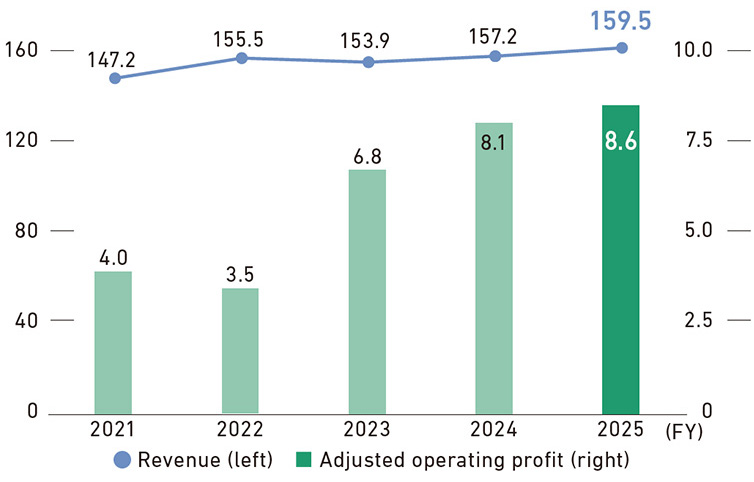
In fiscal 2025, revenue increased 2.3 billion yen year on year, to 159.5 billion yen owing mainly to the effects of price revisions in the frozen and ambient foods business. Despite the impact of soaring raw material expenses, adjusted operating profit climbed 0.5 billion yen compared with the previous fiscal year, to 8.6 billion yen on the back of such factors as revenue growth.
Major initiatives in the frozen and ambient foods business in FY2025
Our flagship frozen udon noodles, packed cooked rice, and okonomiyaki continue to hold a high market share in Japan. In tune with evolving consumer needs, we launched 36 new products for home use and 52 renewed products.
Major initiatives in the seasonings business in FY2025
In addition to focusing on the sale of flagship product lineups, including ramen soup bases and flavored oils to the food service industry and extract products (yeast extracts, meat extracts, etc.) to processed food manufacturers, we are working to create tastes across a wide range of regions and fields in a bid to generate further growth through various measures, including expanding overseas exports and launching new products.
Business strategy approach
The processed food business is positioned to complement the JT Group's profit growth and it is working to grow profits in Japan and accelerate overseas expansion, with the following as its basic strategies.
Strengthen the earnings base in Japan and profit growth by enhancing the value of flagship products with a high market share
Accelerate expansion into overseas markets, where business opportunities are growing, leveraging taste creation expertise developed in Japan
Address future food issues through business activities such as research and development
We anticipate conditions throughout the processed food business will remain harsh buffeted by such factors as soaring raw material costs and fluctuations in foreign currency exchange rates. Despite this challenging operating environment, profits are projected to steadily grow given such factors as business scale expansion in Japan and overseas as well as product price revisions.
In the processed food business, we are working to realize our Purpose of "Bringing Joy to Meals and Fun to the Table." To this end, we are promoting measures based on the JT Group Materiality, five key issues that form the foundation of our sustainability management.
Sustainability highlights
In the processed food business, we are working to realize our Purpose of "Bringing Joy to Meals and Fun to the Table." To this end, we are promoting measures based on the JT Group Materiality, five key issues that form the foundation of our sustainability management.
Value creation from a medium- to long-term perspective
We position the continuous provision of new value to consumers as a key issue for our medium- to long-term business growth and are committed to the delivery of products as well as research and development.
Creating new product value
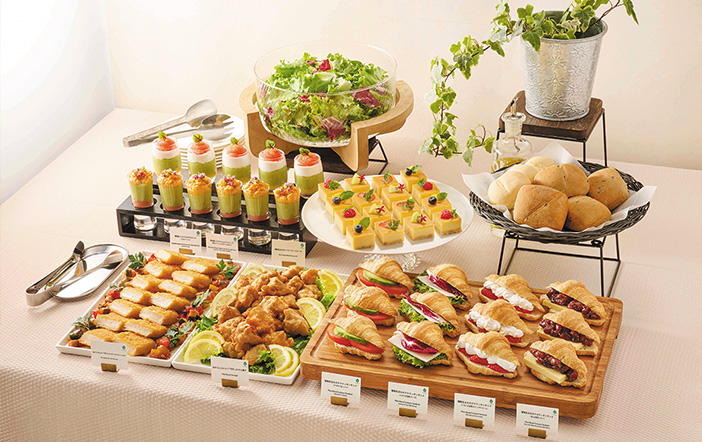
Diversifying consumer interests is an important theme of the processed food business. Accordingly, we are working to provide products to consumers with diverse eating habits. As part of this effort, we obtained halal certification at Fuji Foods' factories in Thailand and Indonesia as well as certain TableMark production lines. This allows us to deliver halal-compliant products. Moreover, TableMark launched its plant-based product brand "BEYOND FREE" for commercial use in 2025. With inbound tourists very much in mind, we offer vegan-certified products. Through these initiatives, we aim to expand the scale of our business over the medium to long term by delivering product value to overseas consumers.
Research and development centered on the Food Research Institute
The Food Research Institute takes the lead in undertaking research and development for the processed food business as a whole and supports the creation of diverse values. Established in 2022, the Institute integrates the research and development functions of TableMark and Fuji Foods in a bid to expand the scope of its expertise from a medium- to long-term perspective. In addition to enhancing the value of existing products, the Institute sets research themes that address a host of future food issues, including the depletion of raw materials, and engages in forward-looking research and development.

Food safety
Consistently delivering safe and high-quality products is fundamental to our operations in the food processing business. This fundamental premise reflects our belief that consumer trust is built on continuously providing safe and reliable products.
Based on this understanding, we engage in safety management from four perspectives: food safety, food defense, food quality, and food communication. These efforts extend across the entire supply chain from product development through the procurement of raw materials to manufacture and shipment. At the same time, we are working to establish and operate a quality assurance system that complies with international food safety standards and regulations in various countries. We are convinced that this will lay the foundation for the medium- to long-term growth of our business overseas.
 See Details

Food Safety

Food Defense

Food Quality
Food Communication
Realizing a sustainable environment and society
In the processed food business, we believe that human life and corporate activities can only be sustainable if nature and society are sustainable. Based on this understanding, we promote initiatives that take into account the environmental and social impacts of our business activities across the entire value chain, from product development and raw materials procurement to manufacturing, logistics, and sales.
Reducing environmental impact and building a sustainable supply chain
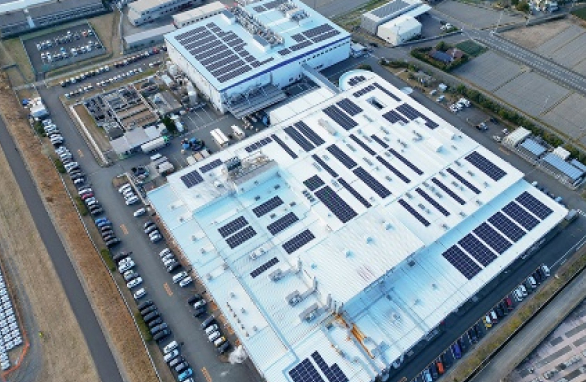
To address the environmental impact of our operations, we are working to reduce greenhouse gas emissions through energy-saving activities and renewable energy systems installation. In addition, we are adopting product-related initiatives such as reducing packaging weight. In an effort to realize a sustainable supply chain, we are engaging with suppliers through dialogue and surveys to better understand the status of environmental and human rights initiatives.
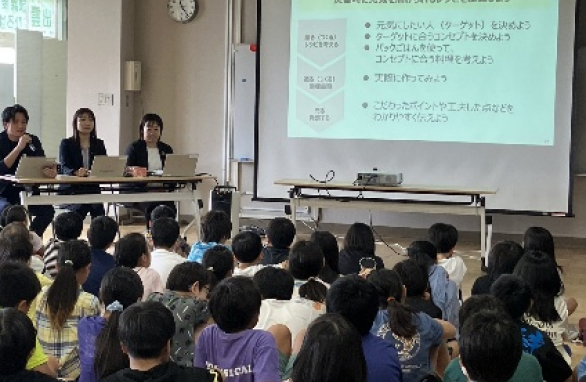
Coexistence with local communities through food
Leveraging the unique characteristics of the processed food business, we are working with local communities to provide food education opportunities as well as disaster relief supplies.
As one example of the Group's food education activities in 2025, TableMark held a collaborative, experience-based lesson at Ota Ward's Izumo Elementary School, where the Food Development Center is located, based on the theme "meals that help lift spirits at the time of a disaster." This lesson was conducted by the company in its capacity as a teaching partner in the "Shaping the Future of Ota" curriculum, a unique initiative put forward by Ota Ward. Through this lesson, the students learned about the importance of food and the concept of "rolling stock" as well as the need for everyday preparedness and developed menus designed to lift people's spirits in the event of a disaster.
Moving forward, we will cherish our connections with local communities and continue to engage in such initiatives as youth development and emergency support.
Integrated Report
2026